The Modern Website Tech Stack We Build Every Client Site On
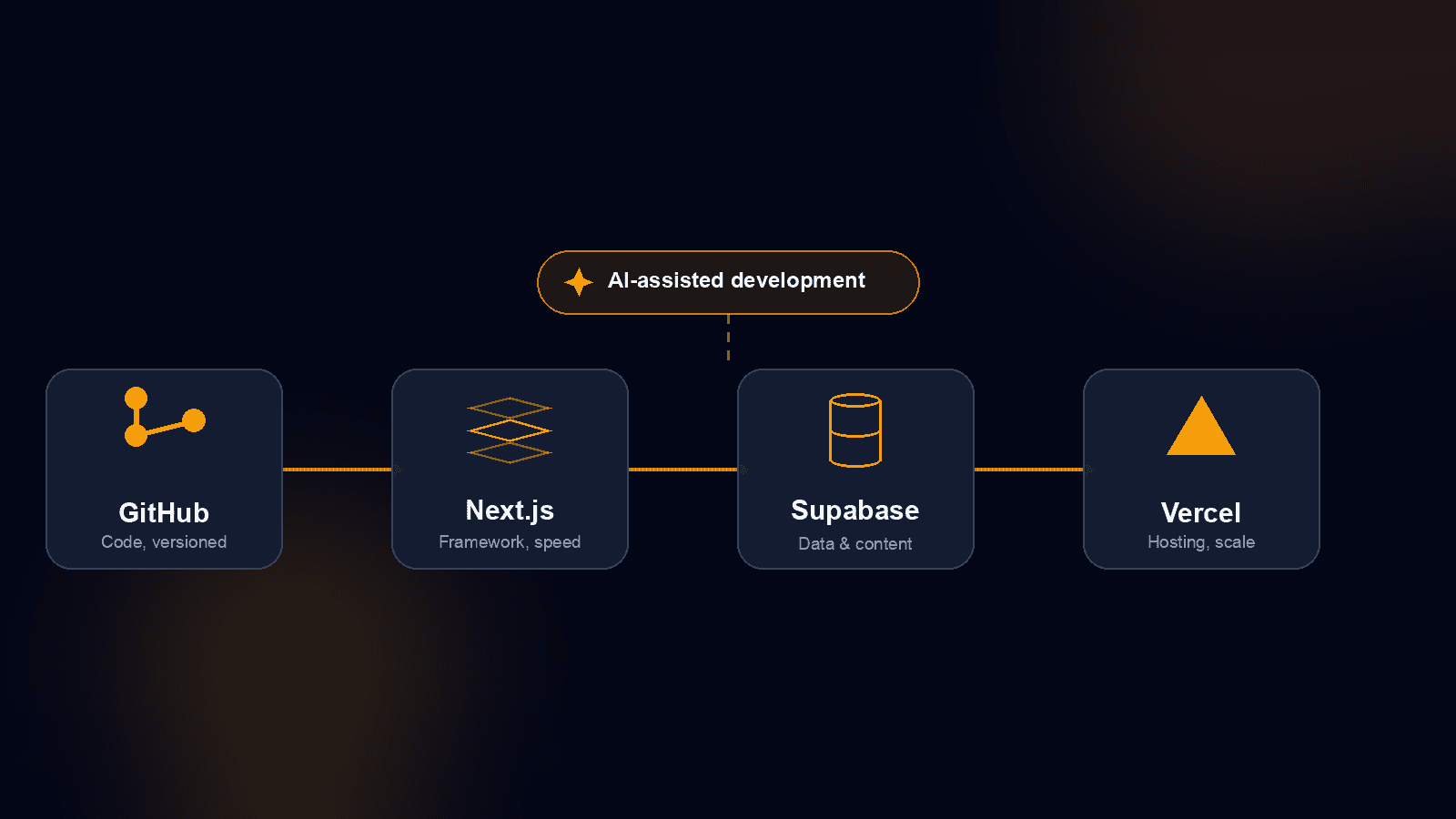
Every serious client conversation eventually reaches the same question: what is this website actually built on? It's a fair thing to ask, because the stack underneath a site isn't a developer preference to skim past it decides how fast your pages load, how well you rank, how easily you can make changes later, and whether you're stuck with one agency forever. Here's the stack we build every custom site on, and the reason each piece earned its place.
Why the stack matters to you, not just your developer
A website's technology choices show up in things a business owner actually feels: a page that loads in under a second versus one that drags, a redesign that takes a week versus a rebuild from scratch, a hosting bill that scales smoothly versus one that spikes without warning. When we recommend a stack, we're weighing exactly those outcomes not chasing whatever is trendy on developer forums. The four pieces below work together as one system, and each solves a specific problem you'd otherwise pay for later.
GitHub: every change tracked, nothing lost
Your site's code lives in a GitHub repository, not on someone's laptop. That means a full history of every change ever made, the ability to roll back instantly if something breaks, and per our pricing terms; source code handover at project completion when that's part of your package. If you ever want a different developer to take over maintenance, there's a real, complete codebase to hand them, not a black box.
Next.js: speed and search visibility built in
We build on Next.js (React's production framework) rather than a page builder or template system. It renders pages on the server, which means search engines and first-time visitors both get a fully-formed page immediately instead of waiting on client-side JavaScript to assemble one. That's a direct lever on two things you care about: Core Web Vitals scores (which affect Google rankings) and the first impression a visitor forms in the first second on your site. It's the same reasoning behind our App Router post on why this framework fits a business website in 2026, this stack piece isn't new to us, it's foundational.
Supabase: your content and data, without vendor lock-in
Blog posts, leads, testimonials, and other structured content live in Supabase, a Postgres database with a proper admin panel on top — not a proprietary CMS export format you'd struggle to migrate out of later. Postgres is one of the most portable, well-understood databases in the industry, so your content stays queryable and exportable on your terms. For projects like our real estate marketplace build, this is what lets listings, search, and a seller dashboard all share one consistent, structured source of truth instead of stitching together plugins.
Vercel: reliable hosting that scales without a phone call
The site deploys to Vercel, a hosting platform built specifically for this kind of application. Traffic spikes are handled automatically, every deployment gets its own preview URL for review before it goes live, and there's no server to patch or reboot at 2 a.m. For a business site, that translates to uptime you don't have to think about and a launch process with a rollback path if anything ever looks wrong post-deploy.
AI-assisted development: faster builds, same senior oversight
We use AI-assisted development tools to speed up implementation, scaffolding components, catching bugs earlier, drafting first-pass code faster than typing every line by hand. What doesn't change is who reviews and ships it: every piece of code is read, tested, and approved by a senior engineer before it reaches your site. Think of it as a faster typist, not a replacement for judgment — the architecture decisions, the accessibility checks, and the "does this actually solve the client's problem" calls are still made by a person who's done this for over a decade.
Does every project need the full stack?
Not every project needs every piece at full strength. A five-page Starter site is still built on Next.js and deployed on Vercel for speed, but it may not need Supabase at all if there's no blog, leads database, or admin panel to manage. Once a project needs a blog, testimonials, or lead capture that a non-technical team member can update without a developer, that's exactly where Supabase and a custom admin panel earn their place.
That's why a full CMS with admin panel is part of our Premium tier rather than bolted onto every project by default, Starter and Business builds can still include a blog or portfolio section without that extra editable backend until non-technical self-service actually becomes a need; our pricing page breaks down exactly what's included at each tier. If you're migrating an existing site instead of building new, the destination doesn't change: this same Next.js, Supabase, and Vercel target is what keeps the migration itself fast and predictable, regardless of the platform you're moving off of today.
What this looks like on a real project
Artificial Wit's marketing site an enterprise AI integration platform was built on exactly this stack: Next.js for the frontend, Supabase behind the content, deployed on Vercel, versioned in GitHub. The result wasn't a stack diagram; it was a site the founder could point enterprise buyers to with confidence, built and shipped without the back-and-forth a heavier, legacy CMS setup usually requires.
None of this is technology for its own sake. It's the same four-piece system for every client because it's the combination that keeps a site fast, keeps your data yours, and keeps your options open if your needs change. If you're weighing a new build or wondering whether your current site is holding you back, our website creation service walks through exactly how this stack maps to your specific project or reach out and we'll tell you plainly whether it's the right fit.
Frequently Asked Questions
Let’s Build Something Great Together
Transform your ideas into a powerful online experience with high-performance web engineering and seamless migrations.