Next.js + Supabase: The Stack Behind Our Custom Apps
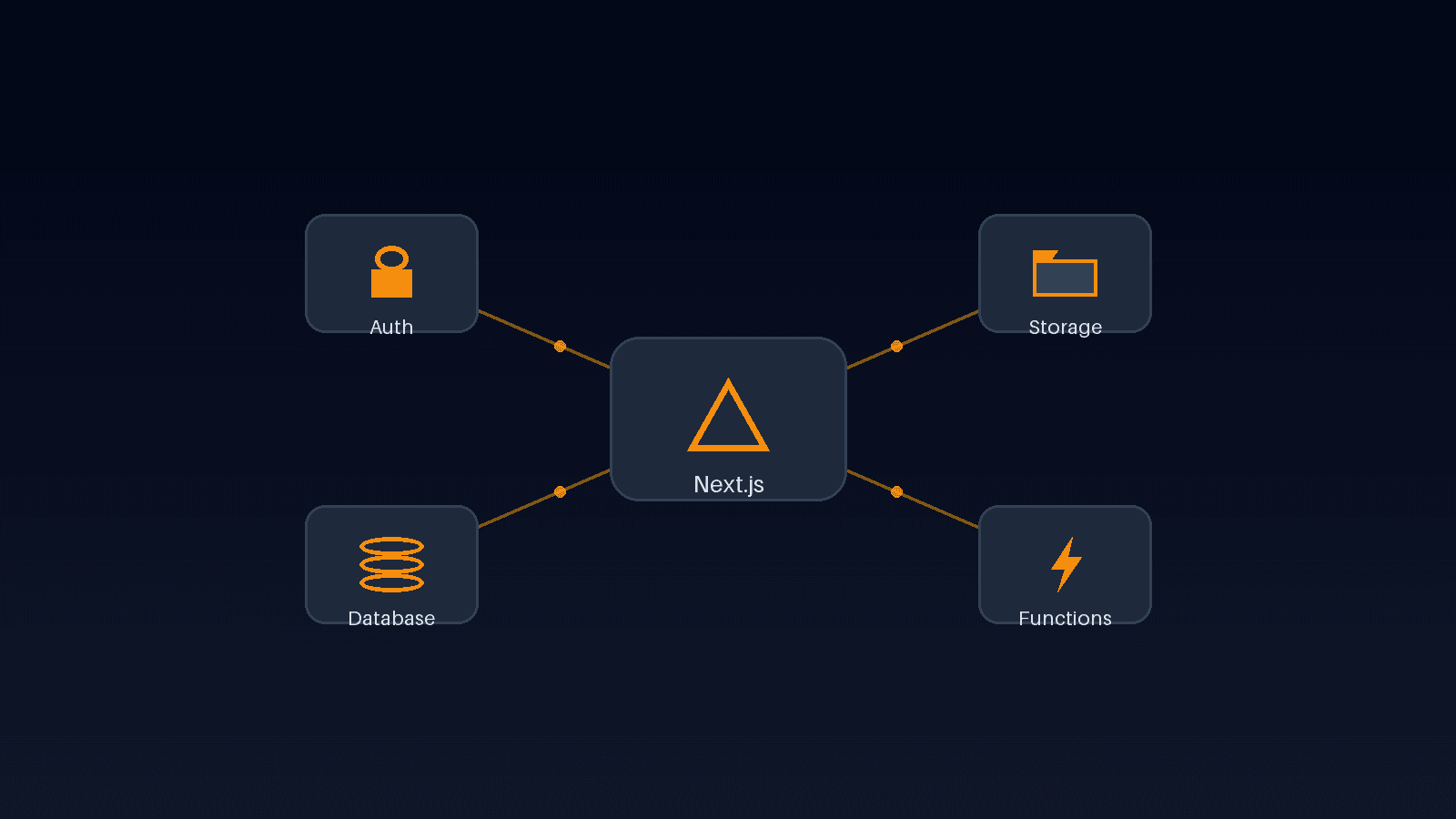
A marketing website and a custom application are built to different standards, even when they share the same framework. A website needs to render fast and rank well. An application needs to handle real user accounts, protect one customer's data from another's, stay responsive as usage grows, and keep working while you're not watching it. When a client needs the second kind of build, not the first, Next.js paired with Supabase is the combination we reach for, and this is what that combination actually gives you.
Authentication and Role-Based Access, Solved Once
Every custom app needs to answer the same question before anything else works: who is this user, and what are they allowed to see? Supabase Auth handles sign-up, login, session management, and social/email providers out of the box, so we're not hand-rolling password hashing or session tokens for every new build. On top of that, role-based access — admin vs. staff vs. customer, or whatever the business actually needs — gets modeled once and enforced consistently, instead of scattered across individual pages as ad hoc checks that are easy to miss on a new route.
A Real-Time Database Instead of a Static Backend
Supabase runs on Postgres, a relational database that models real business data properly, with the option of real-time subscriptions when a screen genuinely needs to update the moment something changes elsewhere — an order status, a support ticket, a live dashboard metric. Next.js Server Components fetch this data directly on the server, so a page can render fully populated on first load instead of shipping a loading spinner and fetching everything client-side after the fact.
Admin Dashboards That Aren't an Afterthought
Most custom apps need an internal side as much as a customer-facing one: a way for the business to manage content, review submissions, look up records, or monitor activity without opening a database client. Because Supabase exposes the same data layer to both sides, an admin dashboard isn't a separate system bolted on later — it's the same Postgres tables, the same auth, with a different set of permissions and a different UI in front of them. That keeps the admin view honest, since it's reading the same data the app itself operates on.
Row-Level Security Instead of Application-Layer Guesswork
In a lot of custom builds, data access rules live entirely in application code — a query that's supposed to only return one tenant's rows, enforced by remembering to add the right WHERE clause every time. Supabase's row-level security moves that enforcement into the database itself, so a policy like "a user can only read their own orders" holds even if a future API route forgets to filter for it. This matters more as an app grows past its first few routes and more people touch the codebase.
Type Safety From Database to UI
Supabase can generate TypeScript types directly from the Postgres schema, so a column rename or a new field shows up as a type error in the Next.js code that reads it, not as a runtime bug discovered after deploy. Combined with Next.js and TypeScript across the frontend, that means the same data contract holds from the database all the way to the UI, instead of the two quietly drifting apart as an app grows and more people touch the codebase without remembering every place a field is used.
APIs and Edge Functions Without a Separate Backend Service
A custom app usually needs some server-side logic that isn't just reading and writing rows — sending a notification, calling a third-party API, processing a webhook. Supabase's Edge Functions and Next.js's own API routes cover this without standing up and maintaining a separate backend service, which keeps the number of moving parts — and the number of things that can go down independently — lower for a small team to actually operate.
Storage and File Handling That's Part of the Same System
Apps that handle uploads — profile photos, documents, product images — need storage that's access-controlled the same way the database is, not a separate bucket with its own permission model to keep in sync. Supabase Storage sits next to the database and auth system, so a file's access rules can follow the same row-level security logic as everything else in the app, instead of being managed as a parallel, easy-to-forget system.
Why This Combination Scales With the Business
None of this is about chasing a trendy stack. It's about the number of systems a small team has to operate, secure, and pay for as an app grows from a first version to something the business actually depends on. Next.js and Supabase cover authentication, database, real-time updates, storage, and server-side logic as one connected system rather than five separate vendors stitched together, which is what actually keeps a custom app maintainable a year in, not just on launch day.
We've built on exactly this combination for platforms like Artificial Wit and VyaparPing — real products with real users, not internal tools or demos. Both needed authentication, a real data layer, and an admin side from day one, which is the same list most custom app conversations start with regardless of industry. If you're scoping a custom app and want to see whether Next.js and Supabase fit what you're building, our Services page covers what's included, or reach out through Contact to talk through the specifics of your project.
Frequently Asked Questions
Let’s Build Something Great Together
Transform your ideas into a powerful online experience with high-performance web engineering and seamless migrations.